
SleepCircle
Lincare Holdings Inc.Medical
4.6325.00 Reviews
- Version
- 2.0.0
- Installs
- 100.00K
- Age Rating
- Everyone
Screenshots
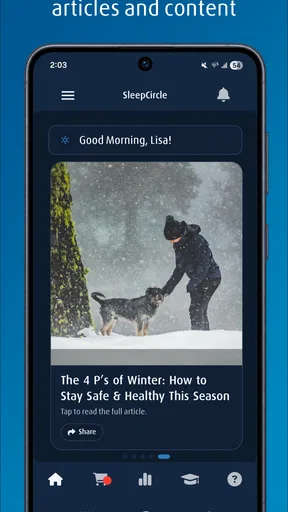
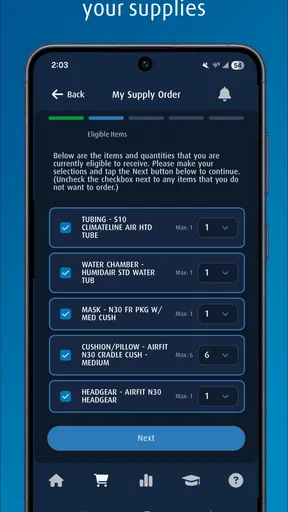
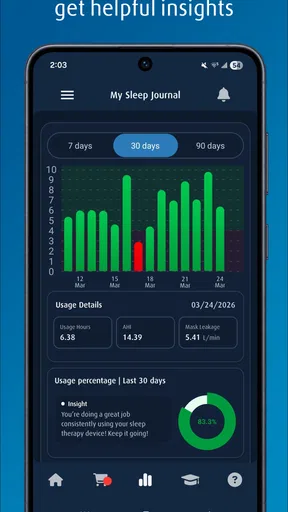
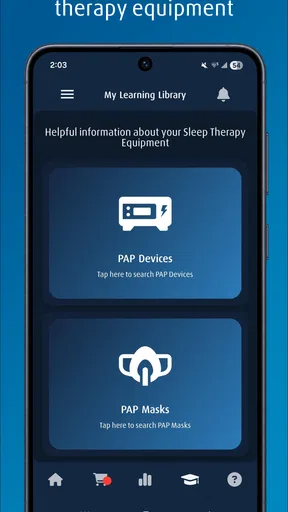
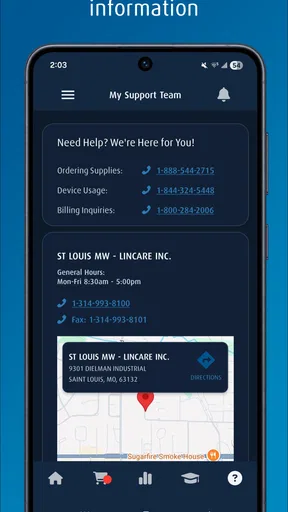
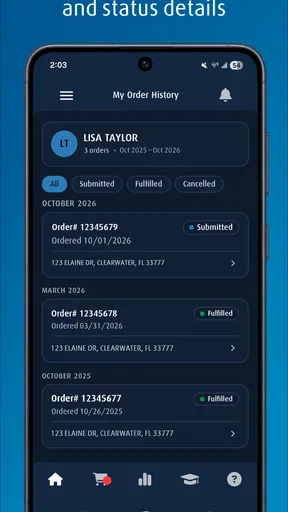
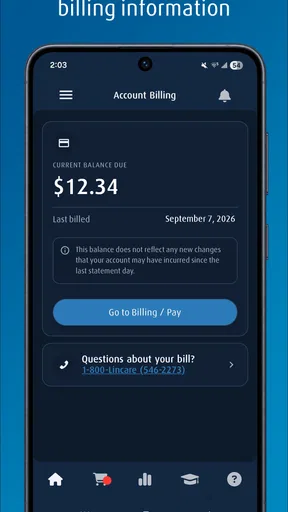
Our Review of SleepCircle
 Analysis by Appyee
Managing sleep therapy can become surprisingly complicated once it is part of your everyday routine. There are appointments to remember, equipment habits to maintain, and questions that often appear at inconvenient times—usually when you are tired and simply want the night to go smoothly. SleepCircle is designed as a medical app for patients who want a more convenient way to stay involved in that process. After spending time with it, I see its main value less as a replacement for clinical care and more as a practical companion for keeping sleep therapy organized.
That distinction matters. I would not approach this as a general sleep tracker, a relaxation app, or a diagnostic tool. Its focus is narrower and more useful for the right person: someone already dealing with sleep therapy and looking for a dedicated digital place to support that routine. The app comes from Lincare Holdings Inc., is free to use, and is rated for Everyone, which makes it approachable for a broad range of users. The real question is whether that focused approach fits the way you currently manage care.
What I would consider before choosing SleepCircle
My first decision criterion would be whether you are an existing sleep-therapy patient rather than someone casually curious about sleep quality. If you only want bedtime sounds, a smart alarm, or charts about ordinary sleep patterns, this is probably not the category I would start with. SleepCircle makes more sense when your sleep routine involves therapy and you want an app built around that context instead of forcing a general wellness product to do the job.
The second criterion is how much convenience you need between clinical interactions. A medical app cannot replace a clinician’s judgment, and I would never use it to alter treatment settings or interpret symptoms on my own. Its usefulness is in helping me stay connected to the practical side of therapy: remembering what needs attention, keeping relevant information easier to reach, and reducing the mental effort involved in managing a recurring health routine.
I would also think about who needs to use the information. Some people are comfortable handling everything through appointments, phone calls, paper notes, or a manufacturer’s equipment application. Others want a clearer digital workflow that they can check when a question comes up. SleepCircle is aimed at the second group. It is especially appealing if you dislike searching through messages or trying to remember what happened during the previous conversation with your care team.
The app’s public reception suggests that this focused purpose is connecting with many users. SleepCircle holds a 4.6 average from around 3.4 thousand ratings, with more than 100 thousand installs. I treat those numbers as encouraging rather than decisive: a good rating does not guarantee that every patient’s setup or expectations will match the app. Still, it indicates that the concept is not merely theoretical and that a substantial user base has found value in it.
The everyday problem it solves best
Imagine a realistic weekday morning. You wake up after a restless night and are unsure whether the issue was your routine, your equipment, or simply an unusually difficult night. Without a dedicated therapy app, you might postpone thinking about it until the next appointment, write a vague note on your phone, or forget the details altogether. With SleepCircle available as part of your routine, you have a more natural place to begin reviewing what needs attention and preparing a clearer question.
That preparation is one of the less obvious benefits of a patient-focused app. The best result is not necessarily that the app gives me an instant answer. It is that I can approach a conversation with a clinician or provider with better context. I can distinguish “I slept badly” from “this pattern keeps interrupting my routine,” which makes the next conversation more productive. I would use it as a bridge between daily experience and professional guidance.
Another useful habit is checking the app at a consistent time rather than opening it only when something goes wrong. A quick morning review can help me notice whether a problem is isolated or recurring. The important point is to avoid turning that check into an obsessive search for perfect nights. Sleep therapy is a health routine, not a performance contest, and an app should reduce confusion rather than create another source of worry.
Why the focused medical design can be an advantage
General sleep apps often try to serve everyone at once. They may combine meditation, sleep sounds, bedtime reminders, alarm functions, lifestyle suggestions, and attractive charts. That variety can be useful, but it can also bury the information that matters to a therapy patient. SleepCircle’s identity as a medical app gives it a more specific role. I would choose that focus when I want less entertainment and more relevance to an established care routine.
This is also where I think the app can be easier to explain to a family member or caregiver. Instead of describing several unrelated tools, I can say that it is the app I use to help manage my sleep therapy. A clear purpose makes adoption easier, especially for someone who is not interested in experimenting with a collection of wellness features.
The developer is another practical consideration. SleepCircle is developed by Lincare Holdings Inc., so it is presented as part of a healthcare-oriented environment rather than as a generic lifestyle product. That does not automatically make every interaction better, but it does make the app feel more aligned with patients who already recognize the developer in connection with their care. If you are already within that ecosystem, the learning curve may feel more natural than moving between unrelated services.
I also appreciate that the app is free. For someone already managing the ongoing demands of therapy, avoiding another subscription is meaningful. Free does not mean there is no reason to read the app’s terms or think about personal information before using it, but it removes one immediate barrier to trying the workflow. The Everyone content rating also makes it less intimidating for households where a relative may occasionally help with digital health tasks.
Small workflow choices that make a difference
My first practical tip would be to use SleepCircle as a preparation tool before contacting support, not only as a place to look after contacting them. If I have a concern, I would open the app while the details are still fresh, collect the relevant context available there, and then decide whether the issue belongs in a provider conversation. This is more efficient than making a hurried call with only a general feeling that something is wrong.
My second tip is to separate convenience from authority. An app can make information easier to organize, but it should not encourage me to make clinical changes without guidance. If I notice a persistent problem, I would use the information I can gather to describe it clearly and then ask the appropriate professional. That approach protects against a common mistake in health technology: confusing access to information with permission to self-treat.
My third tip is to build the app into an existing habit rather than creating a new complicated ritual. I would connect a quick check with something I already do, such as preparing for bed or starting the morning. The less effort the routine requires, the more likely I am to continue using it after the novelty disappears. A patient app succeeds through consistency, not through one impressive first session.
A fourth insight is that the app may be most valuable when nothing dramatic is happening. People often download medical tools only after a problem appears, but the quieter benefit is reducing friction on ordinary days. Keeping therapy-related information within reach can make it easier to respond when a question eventually does arise. That preventative organization is more useful to me than expecting the app to solve every problem instantly.
Where SleepCircle wins, and where another category may fit better
I’d use this section to weigh the recurring convenience of a therapy-focused app against the habits and tools you already rely on. The key question is not whether one category is universally better, but which one makes your next ordinary task easier without adding another system to maintain. That distinction matters most when deciding whether to keep it in your routine.
Its strongest case is for therapy-centered convenience
SleepCircle wins when the alternative is a scattered collection of notes, phone calls, reminders, and general sleep apps. Its dedicated medical purpose gives me a clearer starting point. I do not have to pretend that a wellness tracker understands the practical needs of therapy patients, and I do not have to use a broad sleep product whose main goal may be relaxation or habit formation.
It also wins for people who want a middle ground between total independence and constant contact with a care provider. I can manage the routine aspects myself while keeping professional care in the proper role. That balance is important: I am not handing responsibility for my health to an algorithm, but I am also not treating every small question as an emergency phone call.
The current release is version 2.0.0, and the app requires Android 7.0 or later. For someone using a reasonably modern Android phone, that requirement should be straightforward. The practical takeaway is to check the device before planning a switch, particularly if you keep an older phone for medical equipment or household use. Compatibility is a small detail, but it can decide whether a supposedly convenient app is actually convenient.
General sleep trackers may be better for broader wellness goals
If your main goal is learning when you fall asleep, comparing bedtime patterns, or combining sleep information with exercise and lifestyle data, a general sleep tracker may fit better. Those apps are usually designed around broad personal monitoring, while SleepCircle is more narrowly concerned with therapy management. I would not choose between them based on which one has more screens. I would choose based on whether my central question is “How did I sleep?” or “How can I manage my therapy more conveniently?”
There is also a difference in mindset. A general tracker may encourage experimentation with routines and habits. A medical companion should encourage steadiness, accurate communication, and sensible escalation when something feels wrong. If you want a playful way to improve bedtime behavior, SleepCircle may feel too specialized. If you want a focused tool that respects the seriousness of therapy, that specialization is exactly the point.
Equipment-specific tools can be preferable in some situations
Some patients may already use a tool supplied specifically for their equipment. That kind of application can be the better choice when the user’s priority is highly detailed device information or a workflow tied closely to one machine. I would not abandon a tool that already gives me the device-level information I need simply because SleepCircle is easier to understand. The two categories can serve different purposes, although using multiple apps can also create duplication and confusion.
Before switching, I would ask myself what I actually check each week. If I mostly need equipment details, an equipment-centered option may remain the stronger fit. If I need a patient-oriented place to manage the broader therapy experience, SleepCircle may be more useful. The right decision depends on the gap in my current routine, not on the number of features advertised by any one app.
When a direct human conversation is the better option
There are moments when no app is the right next step. A sudden health concern, a serious change in symptoms, or uncertainty about treatment should go to an appropriate healthcare professional rather than being handled through repeated tapping. SleepCircle can support a conversation, but it should not delay one. I would also avoid relying on it when the main problem is emotional reassurance; a clinician, caregiver, or trusted support person may be more helpful than a screen.
The app is not ideal for someone who dislikes digital health tools altogether. If opening an app feels like another burden, forcing yourself to use it may add stress instead of removing it. In that case, a simpler paper routine or direct support channel could be more sustainable. Convenience only exists when the workflow feels easier than the alternative.
What switching actually costs
Moving to a new medical app has a cost even when the download is free. I have to learn where information lives, rebuild the habit of checking it, and decide which old notes or reminders still matter. I would not switch in the middle of a confusing treatment period unless there were a clear benefit. A calm transition is more sensible: review the current routine, identify the specific frustration, and then see whether SleepCircle addresses that frustration.
I would also avoid running several overlapping systems indefinitely. Keeping a general tracker, an equipment tool, paper notes, and SleepCircle can produce four different versions of the same story. During a short trial, parallel use can help me compare workflows, but eventually I would choose one primary place for therapy-related organization. That reduces the chance of forgetting where an important detail was recorded.
Because the app is free, the financial cost of trying it is low, but the attention cost still matters. I would give it enough time to judge whether it genuinely reduces calls, searching, or uncertainty—not merely whether it looks polished during the first opening. The best test is a real week that includes ordinary mornings and at least one small question about my routine.
Privacy and comfort should be part of that decision without becoming an abstract checklist. Medical information deserves careful handling, so I would read the app’s own privacy and account explanations before entering anything sensitive. I would also make sure I understand which parts of my care still require direct communication. A good digital workflow should leave me more informed and organized, not less aware of where professional responsibility begins.
My recommendation for the right patient
I recommend SleepCircle to Android users who are already managing sleep therapy and want a dedicated, free patient app instead of relying on scattered reminders or a broad wellness tracker. Its strongest quality is its focused purpose. It gives the daily routine a clearer digital home and can help me prepare better questions, maintain consistency, and reduce the small frustrations that accumulate around ongoing care.
I would be more cautious if I wanted a general sleep-analysis experience, detailed equipment monitoring, or a relaxation library. In those cases, a different category may serve the goal more directly. I would also skip it if I am unwilling to maintain any digital health routine or if I am looking for an app to make clinical decisions for me.
For everyone else, the sensible approach is to try it as a support layer rather than expecting a complete healthcare replacement. Use it consistently, keep professional advice in charge, and judge it by whether it makes real therapy tasks easier. SleepCircle is not valuable because it promises to turn sleep into a perfect score. It is valuable when it helps a patient feel less alone with the practical work of managing therapy.
With its free price, Everyone rating, and Android support beginning at version 7.0, it is accessible enough to test without a major commitment. The app was released on March 14, 2025, and its early reception includes 325 reviews, which gives it a visible starting point while still leaving room for personal evaluation. My final view is straightforward: choose SleepCircle when therapy management is the problem you want to simplify. If that is your situation, it is a focused and sensible place to start.
Verdict
Strengths of SleepCircle
- Tracks sleep patterns with clear, easy-to-read summaries.
- Helpful bedtime reminders encourage a more consistent routine.
- Sleep data can reveal trends across multiple nights.
- Simple interface is accessible for first-time sleep trackers.
- Useful insights may help users adjust habits for better rest.
Limitations of SleepCircle
- Accurate tracking may require keeping the phone close while sleeping.
- Results can vary depending on device sensors and placement.
- Some features may be limited without a premium subscription.
- Sleep tracking can use extra battery if enabled throughout the night.
- The app cannot replace professional advice for ongoing sleep problems.
Similar Picks in This Category
View All
WebMD: Symptom Checker
WebMD, LLC4.1

Microphone Amplifier
DOSA Apps4.2

Anatomy Learning - 3D Anatomy
3D Medical OU4.5

Period Tracker and Calendar
SimpleInnovation4.9

GoodRx: Prescription Coupons
GoodRx4.8

CVS Health
CVS Pharmacy4.5
Frequently Asked Questions
What is SleepCircle and how does it work?
SleepCircle is a sleep-focused app designed to help you understand and improve your nightly rest. After setting up your profile and sleep goals, you can use it to record or review sleep-related information, follow relaxing routines, and monitor patterns over time. Its usefulness depends on consistent tracking and honest information, so it should be viewed as a wellness tool rather than a medical diagnostic service.
Is SleepCircle free to download and use?
SleepCircle may be available as a free download, but some features can depend on the version of the app, your device, or optional in-app purchases or subscriptions. Before confirming a purchase, check the store listing for the current pricing, trial conditions, renewal terms, and included features. If you only want basic sleep tracking or relaxation tools, review what is accessible without subscribing.
Does SleepCircle require special equipment or a wearable device?
The basic experience may be usable with a compatible Android or iOS phone, although certain tracking functions can work better with sensors, health-platform connections, or supported wearable devices. Features may vary depending on your operating system and hardware. Before downloading, check the app’s permissions and compatibility details, especially if you expect automatic sleep detection rather than manually entering your bedtime and wake-up information.
Is SleepCircle safe for monitoring sleep problems?
SleepCircle can be useful for noticing habits, organizing sleep information, and encouraging healthier routines, but it should not replace professional medical advice. App-based estimates are not always accurate, particularly when sleep data is entered manually or collected without specialized equipment. If you experience persistent insomnia, loud snoring, breathing interruptions, extreme daytime tiredness, or other concerning symptoms, speak with a qualified healthcare professional.
What privacy information does SleepCircle collect?
Because sleep apps can handle personal wellness information, it is important to read SleepCircle’s privacy policy before creating an account or connecting health data. Check whether the app collects sleep records, device identifiers, location information, analytics, or data from Apple Health or other services. Also review account deletion options, sharing controls, and permissions so you can decide how much information you are comfortable providing.
